How Changing Weather Patterns Are Redefining Accumulator Structures in Soccer, Tennis, and Horse Racing
Rafael Baumann · Aug 16, 2026
How Changing Weather Patterns Are Redefining Accumulator Structures in Soccer, Tennis, and Horse Racing
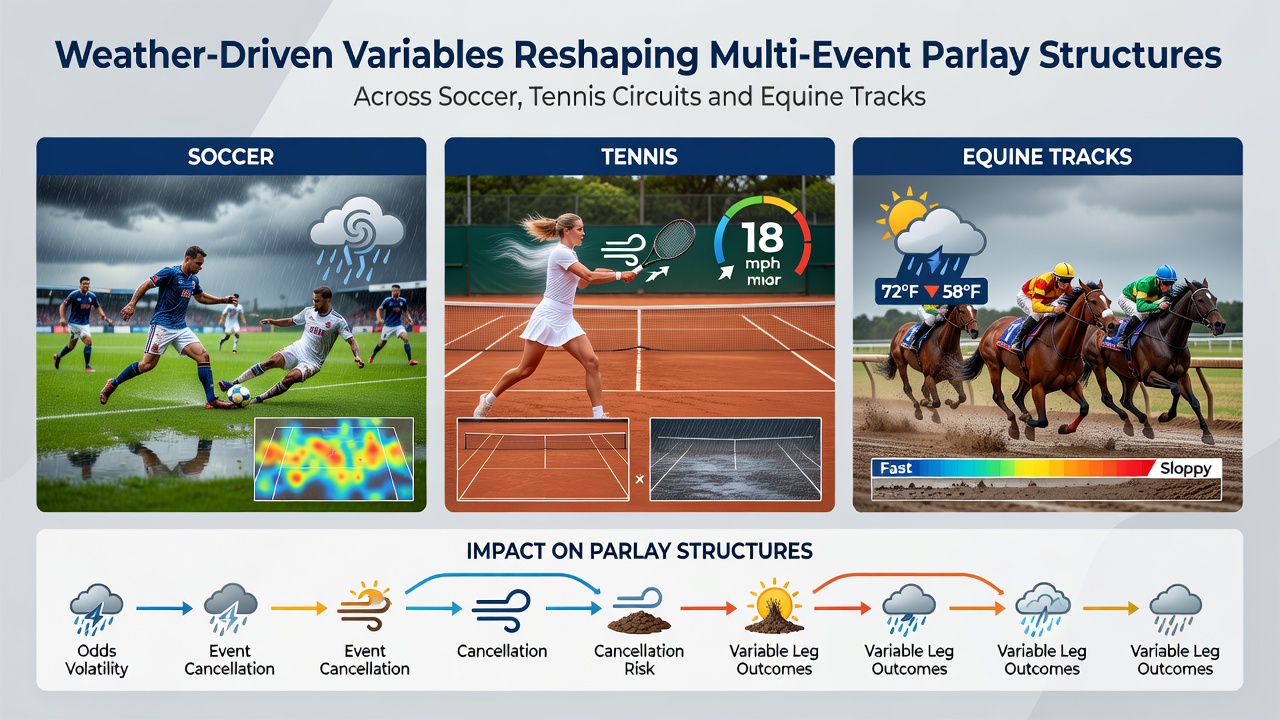
Weather conditions have long influenced outcomes across soccer matches, tennis tournaments, and equine events, yet their effects on multi-event parlay structures have grown more pronounced as betting platforms integrate real-time meteorological data into odds calculations. Observers note that rainfall, wind speeds, and temperature fluctuations alter pitch traction in soccer, ball behavior on tennis courts, and track surfaces at racetracks, which in turn shifts the probabilities that underpin accumulator selections spanning these disciplines.
Soccer Leagues Respond to Precipitation and Temperature Swings
Heavy rainfall during European summer fixtures in August 2026 has prompted adjustments in defensive formations and passing accuracy metrics, according to data compiled by the European Club Association. Teams facing waterlogged pitches tend to favor long balls over intricate build-up play, a pattern that data analysts track when constructing parlays involving multiple league matches. Temperature spikes above 30 degrees Celsius have similarly correlated with increased substitution rates in midweek fixtures, reducing the reliability of goal-scorer props that often anchor accumulator legs.
Tennis Tours Face Wind and Humidity Challenges
Outdoor hard-court events scheduled through late summer circuits show measurable impacts from crosswinds exceeding 20 kilometers per hour, which studies from the International Tennis Federation link to elevated unforced error rates during baseline exchanges. Humidity levels above 70 percent slow ball speeds on certain surfaces, prompting oddsmakers to recalibrate over/under totals for set durations. Bettors constructing multi-event parlays that combine tennis matches with soccer fixtures must therefore account for these variables when selecting live momentum shifts, as sudden gusts can invert pre-match expectations within a single set.
Equine Tracks Adapt to Surface Moisture Variations
At thoroughbred venues across North America and Australia, track management teams apply watering protocols based on forecasts issued by the National Oceanic and Atmospheric Administration, which directly influence going descriptions from firm to soft. Research published by the University of Melbourne's Equine Centre indicates that horses with proven records on heavy ground improve their strike rates by up to 18 percent under wet conditions, prompting adjustments in exotic wager pools that feed into broader accumulator structures. These surface changes interact with soccer and tennis outcomes when bettors link equine results to other sports in the same multi-leg ticket.
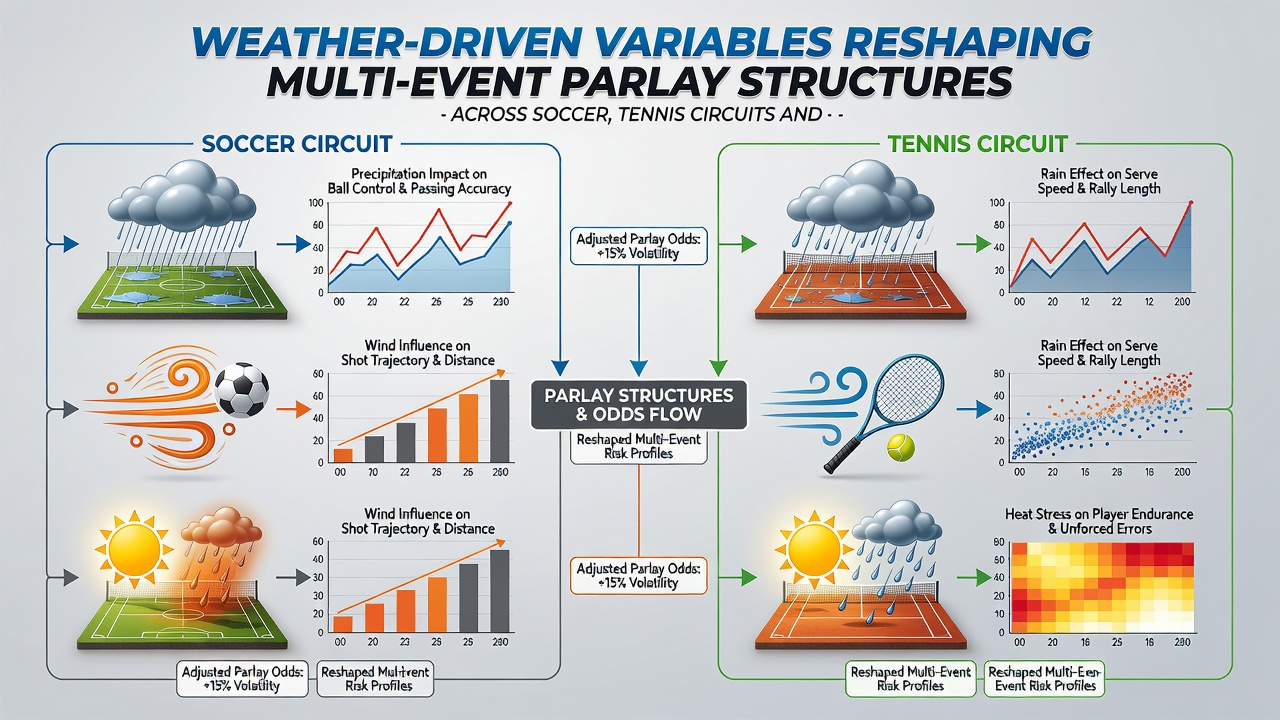
Platforms that aggregate live feeds now incorporate radar overlays and ground-condition sensors, allowing dynamic repricing of parlays that span continents. One documented case from the 2026 summer calendar involved a sudden thunderstorm in central Europe that delayed a soccer fixture while simultaneously altering humidity readings at a concurrent tennis event in North America, forcing automated systems to revise combined odds for tickets that also included an evening race card. Such cross-sport dependencies highlight why weather variables receive dedicated modeling within modern betting engines.
Integrated Modeling for Multi-Sport Accumulators
Industry reports from the Asia-Pacific Gaming Association reveal that operators have expanded their use of ensemble weather forecasting models to predict variance across soccer goal totals, tennis game lengths, and equine finishing times within the same accumulator. These models draw on satellite imagery and ground sensors updated every fifteen minutes, enabling more precise probability distributions than static historical averages alone. Bettors who monitor these inputs can identify value when forecasts deviate from seasonal norms, particularly during August windows when overlapping schedules increase the frequency of weather-sensitive events.
Conclusion
Weather-driven variables continue to reshape how multi-event parlay structures form across soccer, tennis, and equine tracks by introducing quantifiable shifts in performance metrics and surface conditions. Data from meteorological agencies and sports research bodies demonstrate consistent correlations that betting systems now embed into their frameworks, allowing participants to align selections with evolving environmental realities rather than relying solely on form guides. As August 2026 schedules progress, these integrations remain central to accurate pricing across combined wagers.